Learning Ledger 000
Key Insights – one minute read
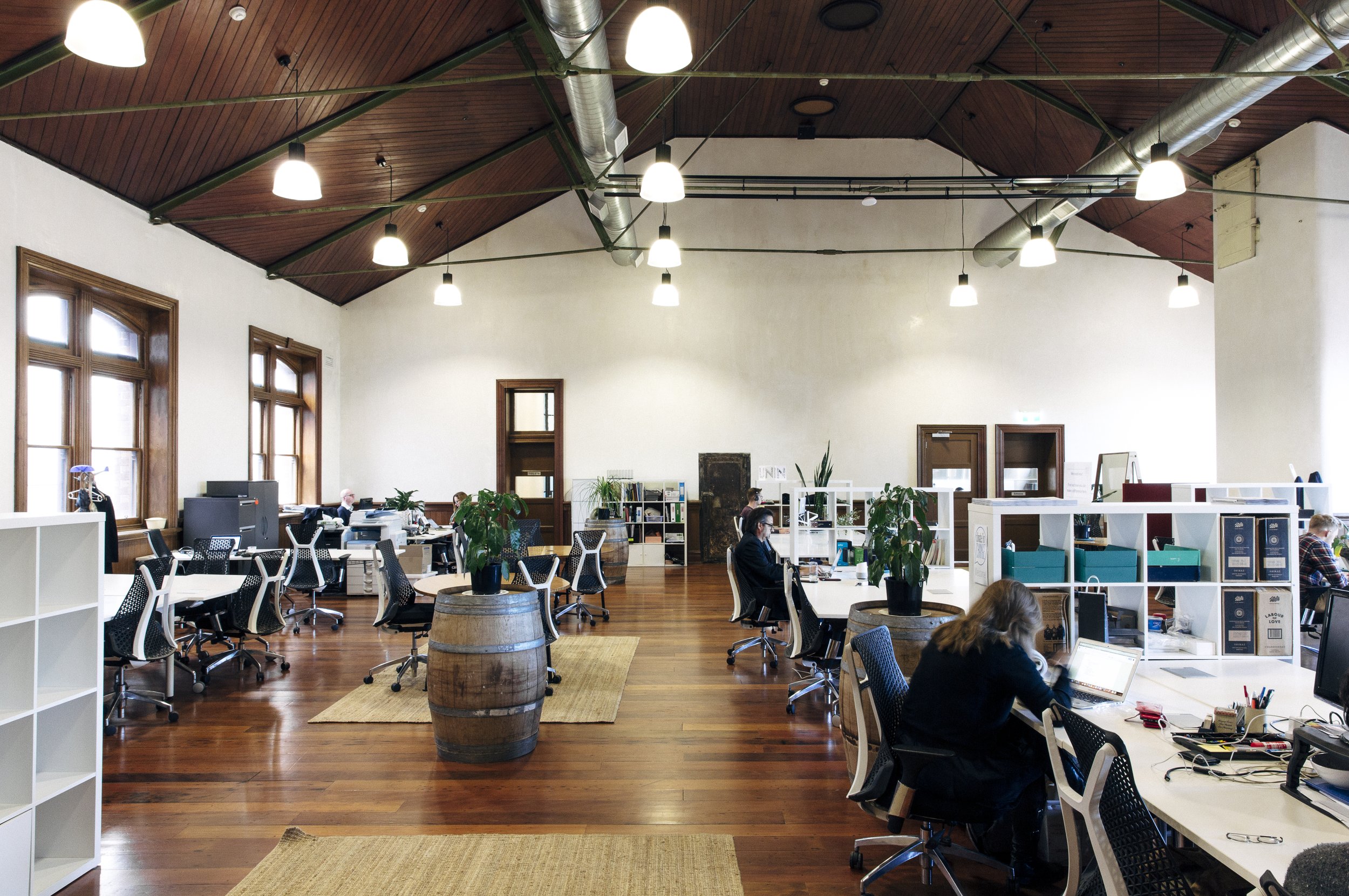
Civic Collective's story did not begin as a plan. It began at Donkey Wheel House, as Ethical Property Australia.
From there, we left to test something unproven: could private capital be brought in to activate a public asset, at scale, through a live operating experiment? That experiment became BRUDI, and BRUDI became Impact Neighbourhoods.
Running that experiment taught us an enormous amount. It also taught us something we didn't expect: the closer we stayed to daily operations, the less capacity we had to build the thing operations kept pointing toward — a framework that could outlast any single asset.
A restructure of Impact Neighbourhoods followed. It was hard. It was also, in hindsight, the separation we needed. Impact Neighbourhoods continues BRUDI as its own venture. We came away with the trust company and the Compass IP intact, together with permission to draw on BRUDI as a case study and arrange site tours.
We have returned to Donkey Wheel House carrying what BRUDI taught us. Not as a retreat, but as the place we now understand differently, having left it.
Action Learning Question
How much of an idea's future value is sacrificed by staying inside the work that proves it?
Why this matters
Most operators who build something that works face a quiet, unglamorous problem: the very success that proves an idea also consumes the time needed to scale it. Running BRUDI well meant tenants, leases, power infrastructure, day-to-day partnership management — real, necessary work, but work that kept us inside a single site rather than above the pattern the site was demonstrating.
This Action Learning Question asks whether that tension can be resolved by design, rather than discovered the hard way.
It isn't unique to running a physical asset. Any civic institute — a council team, a university faculty, a community organisation — knows some version of this same tension: the day-to-day work that proves your value is also the work that prevents you from building the capability to scale it.
Truth & Test
The conventional assumption is that the person who built something is best placed to keep running it indefinitely.
We tested a different proposition, not entirely by choice: that a deliberate separation between operating a proof of concept and building the framework behind it could ultimately serve both better than one person or team trying to do both at once.
Action
BRUDI was always an experiment in bringing private capital to activate a public asset — external to Donkey Wheel House, and the Fund's first leasehold property. It grew from proof of concept into a genuine operating business.
As it grew, a restructure separated the ongoing operation of BRUDI from the trust company and the Compass framework. Impact Neighbourhoods now continues BRUDI as its own venture. Civic Collective took on the trust company, the Compass IP, and returned its focus to Donkey Wheel House — the building where this all started, now going through its own renaissance.
Reflection
Looking back, the restructure was tense and, at times, painful. It was also professional, and it resolved something neither side could easily have resolved by staying combined.
We underestimated, for a long time, how much operational proximity was costing us. Every hour spent solving a tenant issue or a power infrastructure constraint at BRUDI was an hour not spent turning what we'd learned into something transferable. We could see the pattern. We didn't have the bandwidth to build the platform the pattern was pointing to.
The clearest learning is an uncomfortable one: proving a model and scaling a model often require different postures, sometimes different people, and rarely fit inside the same span of attention at the same time.
Clarity
Depth of operational involvement and capacity to generalise from it pull against each other. Past a certain point, staying closer to the work makes it harder, not easier, to build what the work has taught you.
Separation, when it happens by design rather than by crisis, can be a form of maturity rather than a form of failure.
Capability
The restructure forced a capability we would not otherwise have built deliberately: the discipline to step back from operating a single asset and invest that time into codifying the framework, the IP and the AI tools that could now serve many places rather than one.
It also clarified what Civic Collective actually is — not an operator competing to run more assets, but the custodian of the thinking that operating BRUDI produced, now applied through Donkey Wheel House and shared with others through the Compass.
Conditions
BRUDI continues, under Impact Neighbourhoods, as proof that the model works in practice.
Civic Collective returned to Donkey Wheel House with the trust company, the IP, and — for the first time — the bandwidth to build what BRUDI could only point toward.
The conditions now exist for both to succeed on their own terms, rather than compete for the same limited attention inside one structure.
Contribution to the Compass
This Learning Ledger sits underneath every other one. It is the origin of the proposition that experimentation has a cost, and that the cost is not only financial — it is attentional. Reducing the cost of experimentation, the theme running through Learning Ledgers 001 to 003, was learned first here, on ourselves, before it was ever applied on behalf of a client.
It also reinforced that Civic Collective's role is not to be the operator of every asset it touches, but to be the custodian of the intelligence those assets generate — a distinction that now shapes how we work with owners, developers, institutions and communities.
Adaptive Freedom Contribution
The restructure expanded, rather than narrowed, what became possible for everyone involved.
BRUDI gained a dedicated vessel and leadership focused entirely on its own continuation.
Civic Collective gained the freedom to build the Compass, the AI tools and the six service lines into something that could serve many places, not one.
Donkey Wheel House gained a partner returning with a decade of hard-won practice rather than a founder still learning it live.
And Civic Collective gained something else: the adaptive freedom to become what it now is — not a service circling other institutions from the outside, but a contemporary civic institute in its own right, built to help every other civic institute do the same.
As T. S. Eliot wrote in Four Quartets:
"We shall not cease from exploration, and the end of all our exploring will be to arrive where we started and know the place for the first time."
Next Action Learning Question
How might Civic Collective help other founders and operators recognise the cost of staying too close to their own proof of concept — before a restructure forces the lesson on them?.
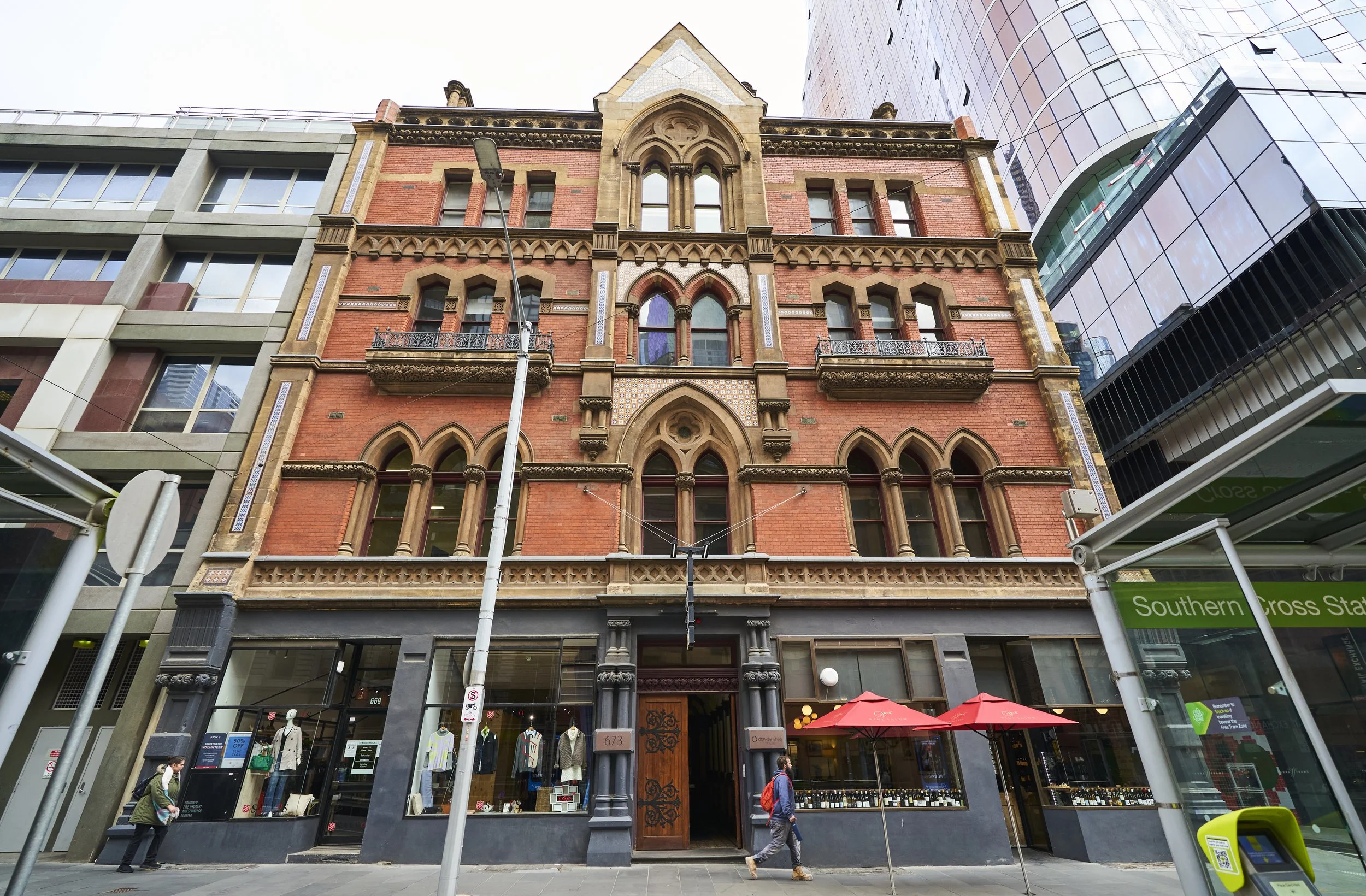
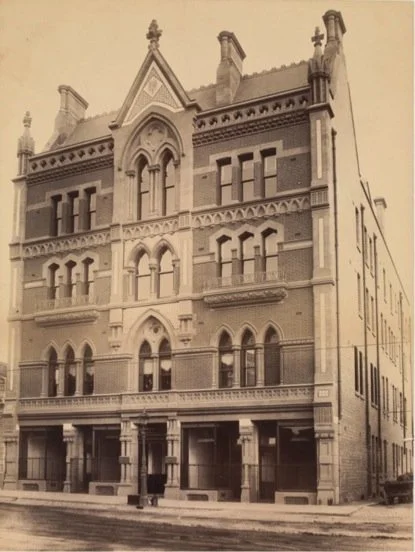
Donkey Wheel House circa 1891
HQ for the world’s largest cable powered tramway system - shaping what was then called “Marvellous Melbourne”