
Learning Ledger 001
Key Insights – one minute read
A decommissioned former school campus taught us that the greatest barrier to innovation is rarely a lack of ideas. It is the cost of learning.
Working with Merri-bek City Council to transform an underutilised civic asset into the Brunswick Design and Innovation Centre (BRUDI), we discovered that reducing the cost of experimentation unlocked far more innovation than trying to eliminate uncertainty.
Rather than waiting for perfect information before acting, we created the conditions for organisations to test ideas, learn quickly and adapt together. As confidence grew, so too did investment, collaboration and opportunity.
This experience fundamentally changed how we think about regeneration. Successful neighbourhoods don't emerge from certainty. They emerge from continuous cycles of action and learning.
We realised that reducing the cost of experimentation is one of the most powerful ways of increasing a neighbourhood's capacity to adapt, innovate and create lasting value.
Read on to discover how a former secondary school became the foundation for one of Civic Collective's most important ideas.
Action Learning Question
How might an ageing civic asset become a platform for innovation rather than a maintenance liability?
Why this matters
Across Australia, thousands of civic buildings sit underutilised while communities struggle to find affordable places to work, collaborate and innovate. Too often these assets are viewed as liabilities to be maintained, redeveloped or disposed of rather than as places capable of generating new forms of civic, social and economic value.
This Action Learning Question emerged from a simple proposition: what if the greatest opportunity lay not in changing the building, but in changing how we thought about it?
Truth & Test
The conventional approach to major civic assets is to reduce uncertainty through detailed planning before taking action.
We chose to test a different proposition.
Could reducing the cost of experimentation produce better decisions than attempting to eliminate uncertainty?
Rather than seeking a perfect masterplan, we created opportunities to learn through action. Small interventions were introduced, partnerships formed, spaces adapted and ideas tested. Each cycle informed the next.
Action
Working alongside Merri-bek City Council, Civic Collective transformed a former secondary school into the Brunswick Design and Innovation Centre (BRUDI).
Over time the site attracted advanced manufacturers, biotechnology companies, robotics businesses, researchers, community organisations and education partners. More than 200 jobs were created and more than $4 million of private investment followed public leadership.
Importantly, none of these outcomes were fully visible at the outset. They emerged through successive cycles of experimentation, observation and adaptation.
Reflection
Looking back, some of our strongest learning came from the decisions we would now make differently. For example, we underestimated the long-term demand for electrical capacity. Earlier investment in upgraded power infrastructure would have removed constraints that later limited growth for advanced manufacturing tenants.
More fundamentally, the project challenged our assumptions about risk itself. We discovered that waiting for certainty often delayed learning, while small, carefully designed experiments generated evidence quickly and reduced the cost of future decisions.
The project also revealed that the most valuable asset was never the buildings themselves. It was the growing network of relationships, trust and shared learning that developed around them.
Clarity
The project made a few things increasingly clear.
The primary constraint on civic innovation was not a lack of ideas, investment or ambition. It was the cost of experimentation.
As the barriers to trying new ideas fell, learning accelerated. As learning accelerated, better decisions became possible with less risk.
This shifted our understanding from managing assets to designing environments where learning could flourish.
Capability
The project developed capabilities well beyond property activation.
Council became more confident in working through experimentation rather than prediction.
Businesses gained access to affordable space in which to grow.
Researchers and industry learned alongside one another.
Partnerships became stronger through repeated cycles of collaboration.
Most importantly, participants developed greater confidence in navigating uncertainty together.
Conditions
The former school became a living innovation precinct.
Vacant space became productive.
Public investment attracted private investment.
Organisations that might never otherwise have met began working alongside one another.
The conditions for continued experimentation improved because trust, relationships and shared experience accumulated over time.
Rather than creating a finished project, BRUDI created a platform capable of continuous learning.
Contribution to the Compass
This Action Learning Question contributed to several ideas that were later codified within the book The Compass: A Civic Platform for Regeneration.
Most significantly, it demonstrated that reducing the cost of experimentation accelerates learning while reducing the cost of failure.
It also reinforced that civic value emerges through relationships as much as physical infrastructure, that Action Learning Questions provide a disciplined way of navigating complexity, and that sustained reflection transforms lived experience into transferable Civic Intelligence.
Adaptive Freedom Contribution
The greatest contribution of BRUDI was not simply the renewal of a civic asset.
It expanded the capacity of people, organisations and institutions to participate, create, adapt and shape the future together.
By reducing the barriers to experimentation, more people were able to test ideas, build partnerships and discover opportunities that would not have emerged through planning alone.
Next Action Learning Question
How might reducing the cost of experimentation help other civic institutions unlock the latent potential already present within their communities?
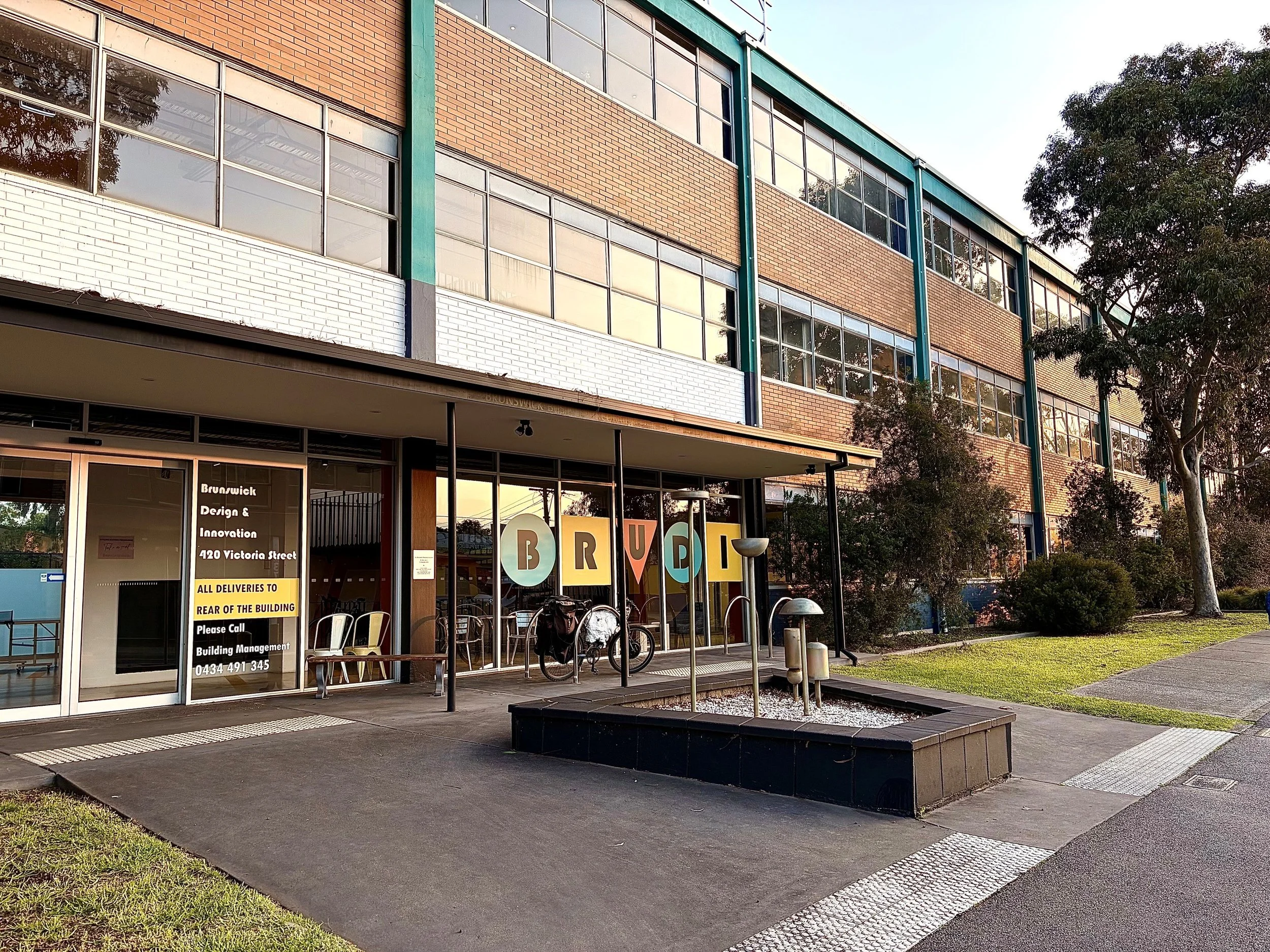
Main entrance to BRUDI - Brunswick Design and Innovation Centre.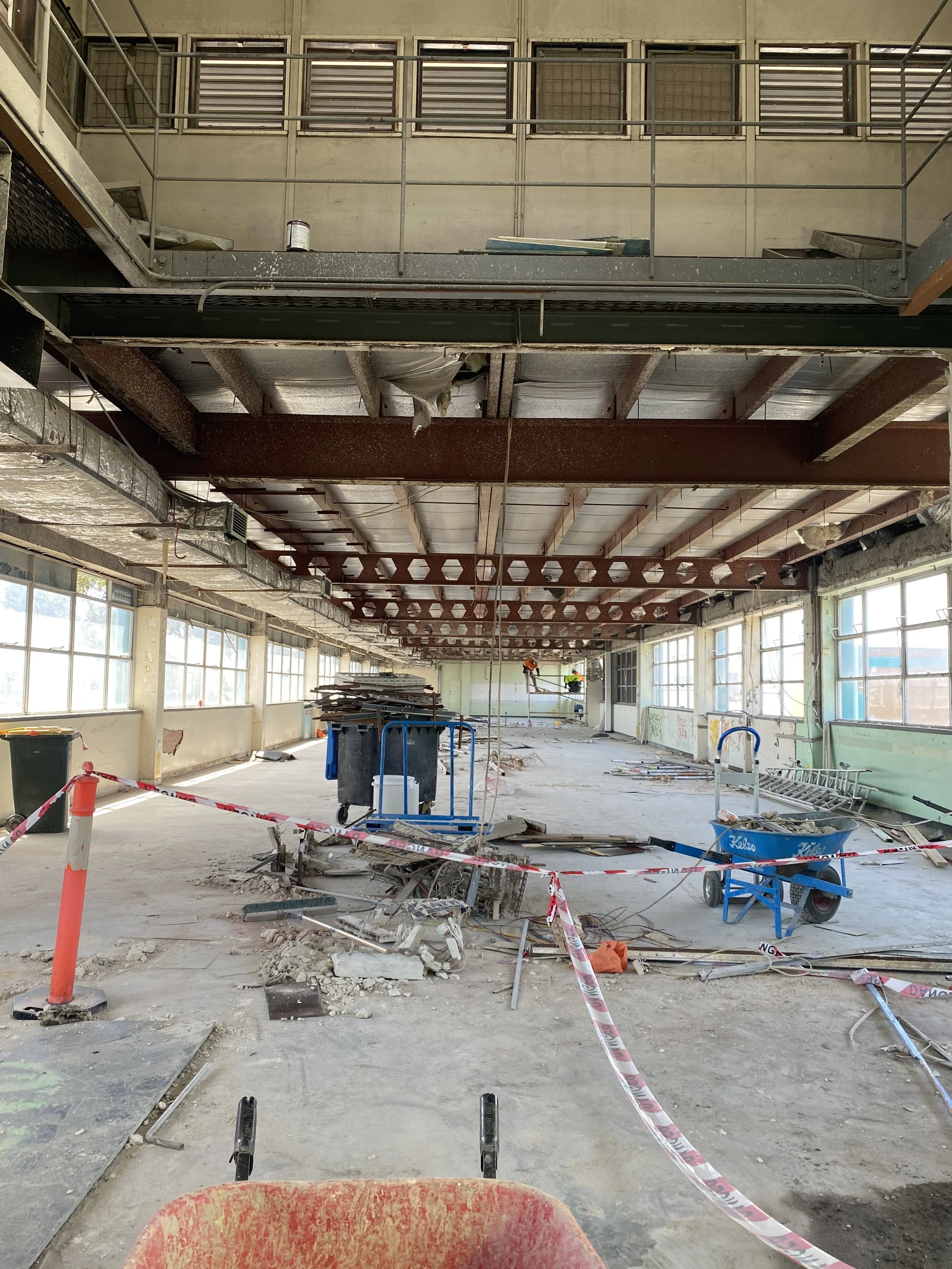
Transforming 1,100 SQM of space from classrooms to laboratories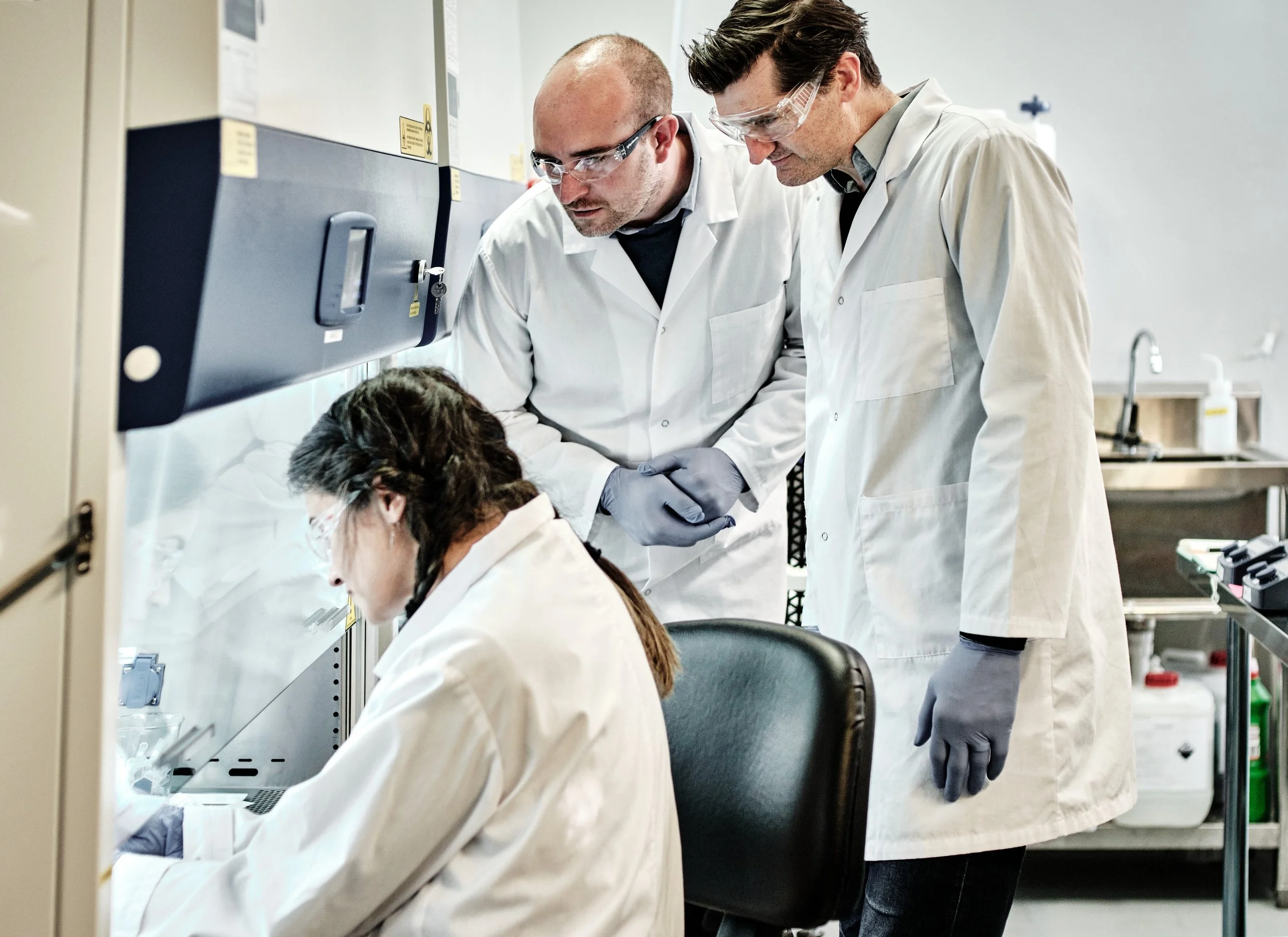
Creating conditions for $60M of investment for medtech at BRUDI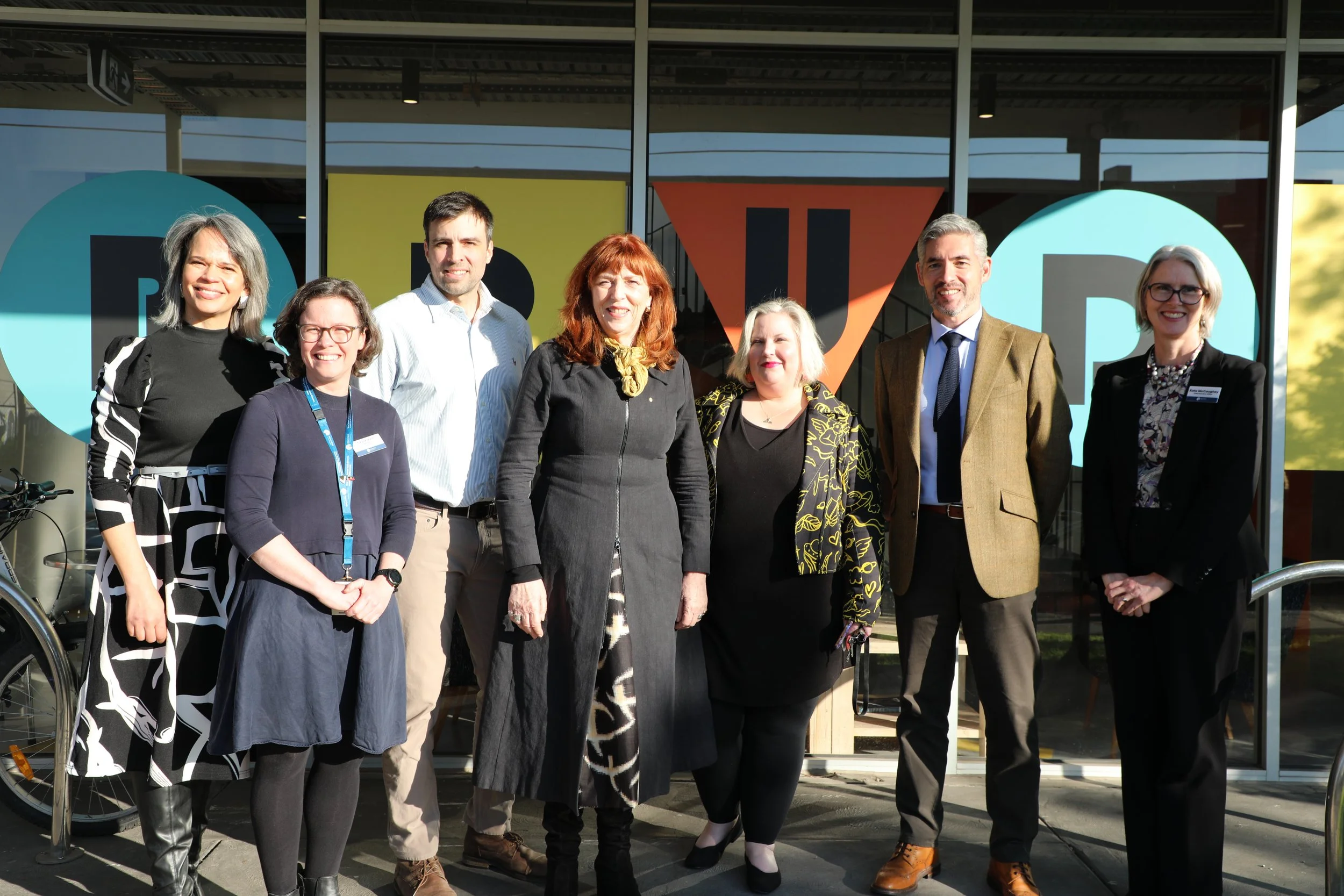
Her Excellency the Governor of Victoria (centre) and the CEO of Merri-bek Council, Kate McCaughey (far right) visit BRUDI.